Speech therapy has always been about more than data or documentation; it’s about connection. The best tools help you listen more deeply, notice more quickly, and stay fully present with the people you serve. As the field evolves, so do the technologies that support your work.
Here are five tools that SLPs across settings are turning to in 2026 to save time, improve your practice, and make every session flow a little easier.
1. GTD Speech
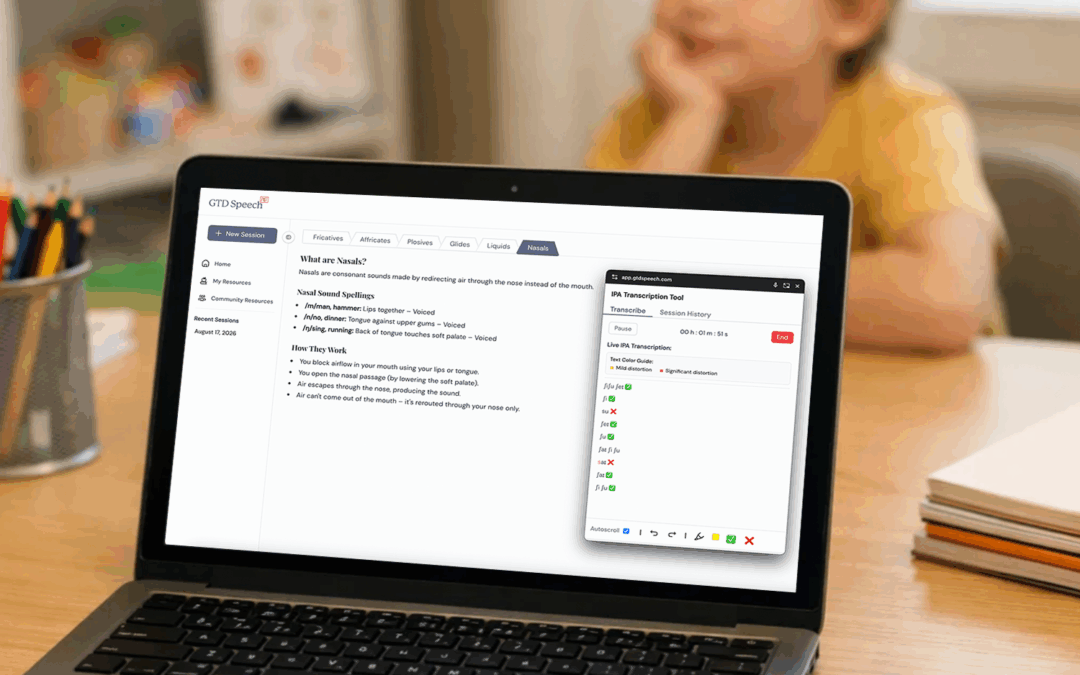
Built by an SLP, for SLPs. GTD Speech provides real-time phonetic and IPA transcription support during your sessions. It feels like having a second set of ears in every session by capturing substitutions, omissions, and possible distortions in real time so you can stay focused on your client.
Why you’ll love it: Instant phonetic transcription, intuitive visual flags, and seamless markup tools. Everything you need to stay present with confidence.
Try it if: You want to spend less time on transcription and documentation, and more time focused on your clients and clinical decision-making. With support that helps you see speech sounds, you can confirm what you’re hearing and move therapy and evaluations forward more efficiently.
2. SuperFeeders
SuperFeeders, LLC specializes in training, consultation, and providing resources for pediatric feeding and swallowing. They offer comprehensive developmental courses designed specifically for feeding disorders, individualized consultation services, customized team training, and a quarterly online journal club that fostering discussions of the most current research and evidence-based interventions.
What makes it different: They work with SLPs, OTs, & other clinicians to help build the confidence and expertise needed to effectively assess and treat pediatric feeding and swallowing challenges.
Perfect for: SLPs who want to have support and extend their training with complex feeding and swallowing disorders.
3. IndiAide
IndiAide is a Remote Therapeutic Monitoring (RTM) platform built for SLPs and other therapists. You assign personalized home exercise programs through a simple app, improve patient adherence, and monitor progress remotely.
Why it’s worth exploring: SLPs can get reimbursed for between-session support using billable RTM codes—turning home practice into extra revenue while boosting therapy outcomes.
Pair it with GTD Speech to capture accurate session data that informs the home programs you assign.
4. SLPTools.ai
SLPTools.ai uses AI to handle the parts of your job that can cause burnout. It offers features like AI-powered SOAP notes, language sample analysis, an SLP-specific chat assistant, and an AI calendar for scheduling.
Great for SLPs who are: Looking to save time on administrative tasks.
Use alongside GTD Speech for real-time transcription during sessions and AI support for everything that comes after. Less time documenting, more time with clients.
5. MasonSpeech.com
Carryover is everything.
MasonSpeech.com is a resource library that connects your therapy sessions to home practice. Ready-to-use printables, songs, stories, and consistent cues so kids get familiar practice everywhere, not just in your therapy room.
Why SLPs love it: Quick prep. Fun carryover activities. Short daily home sessions that actually work. When families have the right tools, progress happens faster.
Perfect for: Busy clinicians who want to boost family involvement and generalization without spending hours creating materials from scratch every week.
How to Choose What Works for You
Here’s what I wish someone had told me earlier: Not every tool is for every SLP.
Your setting is different. Your caseload is different. What makes you feel supported versus overwhelmed is different.
The tools that help are the ones that give attention back instead of demanding more of it. They don’t interrupt your session. They don’t add steps. They don’t make you feel like you need a tutorial just to get started.
Start small. Try one or two. Keep what genuinely helps and let go of what doesn’t.
- For real-time transcription confidence: GTD Speech
- For feeding therapy expertise: SuperFeeders
- For remote monitoring that actually pays: IndiAide
- For documentation assistance: SLPTools.ai
- For home practice that families will actually do: MasonSpeech.com
Technology should fit your workflow, not force you into one.
The Bigger Picture
If you’re feeling overwhelmed right now, I want you to hear this: The weight you’re carrying isn’t evidence that you’re not good at this. It’s evidence that you’re doing deeply skilled work in a system that doesn’t always give you enough support.
These tools aren’t about working harder or being more organized. You’re already doing both.
They’re about having something in your corner that makes the hard parts a little easier. So you can focus on what you’re actually great at: listening, connecting, and helping someone find their voice.
You don’t need to be perfect. You need to be supported.
If you’re ready to spend less time transcribing and documenting speech sounds, and more time actually listening, analyzing, and treating, try GTD Speech. Not because you’re skills aren’t enough, but because seeing speech sounds can help validate your clinical judgment and support more efficient therapy.
You’ve got this – now with added support.